
FOR HYDROPONIC GREENHOUSES CALL 061 537 4001
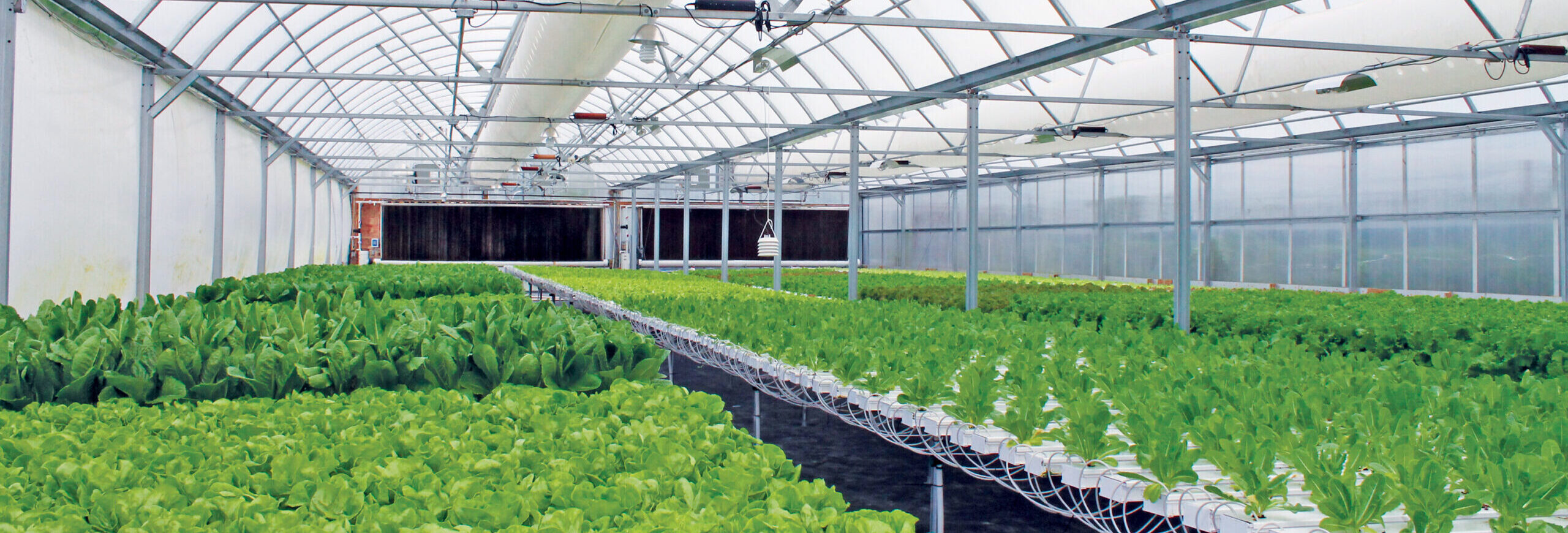
Hydroponic Greenhouses is a production method where the plants are grown in a nutrient solution rather than in soil. The greenhouse and its environment control system are the same whether plants are grown conventional greenhouses or with hydroponic greenhouses. The difference comes from the support system and the method of supplying water and nutrients.
FOR NET GREENHOUSES CALL 061 537 4001
Advantages of Hydroponic Greenhouses
- Greater plant density-plants can be moved as they grow. Use of a growth room for germination and seedling production and the spacing of certain crops in the hydroponic greenhouses decreases the average area needed per plant over conventional soil production.
- Higher yields – reports of higher yields and better quality are common although equal yields should be able to be obtained from a conventional cropping system.
- Less water consumption-in methods where the root system is contained in a closed trough or tubeless evaporation occurs and water consumption is reduced.
Disadvantages of Hydroponic Greenhouses
- Increased initial investment – additional costs pumps, tanks, controls and support system. If supplemental lighting operation increase the electricity costs.
- More technical skill is needed – a grower with a good chemical and plant production background
crops
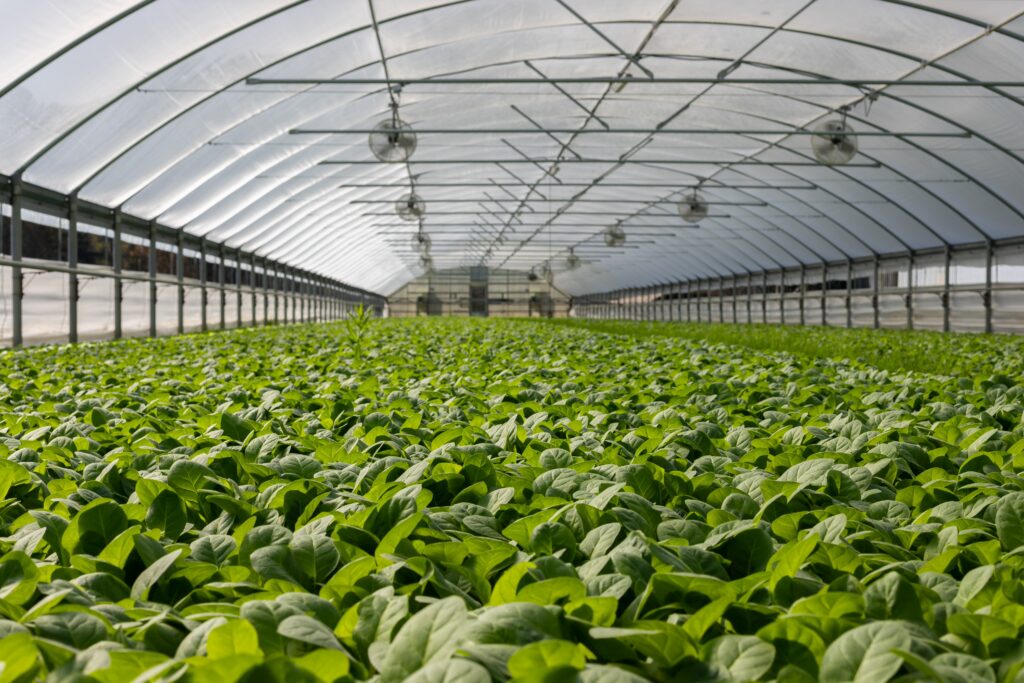
Although almost any crop can be grown hydroponically, the most common are leaf lettuce, tomatoes, peppers, cucumbers, strawberries, watercress, celery and some herbs. One key factor in system design for a particular crop is how it is supported in the nutrient solution.
GROWING SYsTEMS
Many innovative systems have been developed to replace the traditional gravel filled bed. When evaluating the types of system to install, consideration should be given to such factors as the type of crop grown, space requirements, growing time, support system and economics. These systems can be set up in either a greenhouse or growth room. Some growers use both, the growth room for germination and seedling production and the greenhouse to grow out the crop. The extra heat from the growth room lights may be used to heat the greenhouse.
Troughs and pipes
Open and closed plastic troughs or PVC pipes are commonly used for lettuce, tomato’s and cucumbers. These may contain just the nutrient solution or may be filled peat moss ,vermiculite or perlite. Some are mounted on the rollers or movable racks for spacing the plants as they grow. Three inch diameter PVC pipes with holes 6 inches on center are being used for leaf lettuce production. A common length is 10 or 12 feet. Carts may be used to move the pipes from the growing area to the packing room.
Trays
Periodically flooded trays are used for growing lettuce. Plants started in 1 to 2 inch diameter growth blocks are manually spaced as the plants grow. Trays are made from molded plastic or waterproof plywood.
beds
A system consisting of a plastic lined ground bed with nutrient solution pumped in at one end and drained at the other. Lettuce plants are supported in foam polystyrene flats that float on the solution.
Nutrient film technique
This system uses channels formed out of thin film plastic. The channels are place on the ground or benches. Nutrients are supplied through plastic tubing to one end of the channel and drained into a below ground reservoir at the other end. Seedlings are usually grown in pots. Poly bags or grow blocks support the plants in the channel.
Bags
A modified hydroponic system that uses polyethylene film bags filled with a peat-vermiculite mix has been developed. The bags are laid end to end and drip tube or soaker hose inserted to supply the nutrients. The bags may be good for several crops before they have to be replaced.
aeroponics
This is another modified system in which the plants are supported through a plastic cover into a closed tank. Nutrients are supplied to the roots as a fine mist or fog.
other components
Besides the plant support system, tanks, pumps and controls are needed. Tanks made of concrete, plastic or fiberglass are common. Submersible pumps designed for chemical solutions should be used as the fertilizer salts will corrode pumps made for use with water. Controls can be as simple as time clock and manual switches or as complex or as a computer that automatically adjusts the chemical content of the nutrient solution.